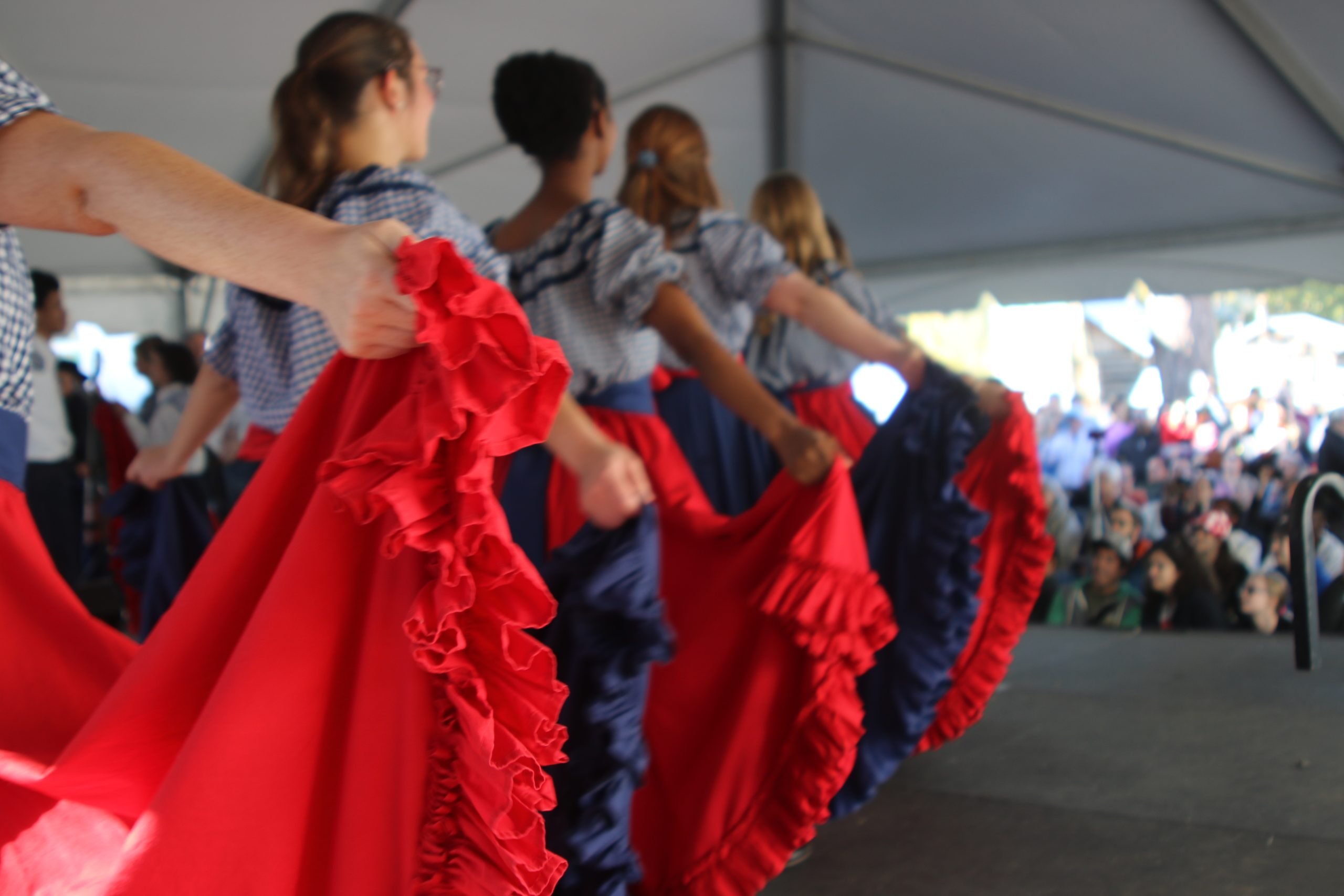
For generations, the N.C. State Fair’s Folk Festival has celebrated North Carolina’s musical and dance traditions. This year, the festival is making room for even more talent, expanding its official name to the N.C. State Fair Folk Festival & Performing Arts and adding new opportunities for performers to take the stage.
“We want to be sure that people understand that part of the folk festival is the performing arts,” said festival superintendent Jeri-Ellen Helms.


The expanded festival includes new dramatic arts divisions, an a cappella competition and additional opportunities for school and youth performers. The changes also bring three new featured days to the festival’s schedule: Dramatic Arts Day on Wednesday, Oct. 21; School & Youth Showcase on Friday, Oct. 23; and A Cappella Day on Sunday, Oct. 25.
For Helms, who is serving her fifth year as superintendent, the changes are about making sure more people know there is a place for them at the fair.
“We’ve always had room for more divisions at the Folk Festival,” Helms said. “We wanted to expand it to really let people know, hey, this is here for you. This is for local people who want to showcase their talent.”

Find the festival at the fair:
The N.C. State Fair Folk Festival & Performing Arts takes place under a large tent next to the church facing Heritage Circle, on the west side of the fairgrounds.
The expanded name makes that invitation more apparent, emphasizing that the festival is about more than traditional folk music. From heritage dances and instrumental performances to poetry, theater and contemporary music, the festival welcomes a broad range of performers and styles.
“We really expanded it to make sure that everybody could be represented at the same time,” Helms said.
A tradition that continues to evolve
The festival’s history goes back nearly 80 years at the N.C. State Fair, but its roots stretch even further into North Carolina’s cultural heritage.
Bascom Lamar Lunsford, a musician and folklorist born in Mars Hill in 1882, founded the Mountain Dance and Folk Festival in Asheville in 1928. Often recognized as the first event to be called a folk festival, it celebrated the traditional music and dance of Southern Appalachia, helping introduce the region’s cultural heritage to wider audiences.
Lunsford later helped establish the Folk Festival at the N.C. State Fair in 1948, bringing that tradition to generations of fairgoers.
Over the years, the festival has grown beyond its Appalachian roots to embrace a wider range of cultural traditions and performance styles. Today, its heritage categories include clogging, traditional music, global folk dance and Indigenous dance, alongside newer dance and music categories that reflect the diversity of performers across North Carolina.
The expanded Performing Arts offerings build on that history while creating more room for contemporary and theatrical expression.
“The fairgrounds and the State Fair are always evolving,” Helms said. “But we also want to hold onto our heritage and traditions, and we also want to include and expand the ever-evolving world and traditions that are included in that.”
The goal is not to replace the music and dances that have defined the event, but to welcome additional performers who might not have seen themselves represented in its traditional categories.
Three new days bring new opportunities
The 2026 schedule reflects the festival’s expansion, giving several performance categories their own featured days.

Wednesday, Oct. 21: Dramatic Arts Day – The new dramatic arts divisions open the festival to performers who tell stories through spoken word, theater and theatrical music.
Categories include poetry performance, storytelling, monologues, duo scenes, musical theater and show choir or glee club performances.
Friday, Oct. 23: School & Youth Showcase – The School & Youth Showcase highlights the young performers and school groups who help carry North Carolina’s artistic traditions into the next generation.
The festival already offers youth classes across multiple music and dance divisions. The dedicated showcase day provides another opportunity to highlight student talent and give young performers a place to share their work with fairgoers.
Sunday, Oct. 25: A Cappella Day – A cappella performers will have their own featured day, celebrating vocal music performed without instrumental accompaniment.
Recent posts on the festival’s Facebook page have the full schedule along with updates and even live streams of some competitions and exhibitions.
More than a showcase
Although the festival provides a stage for local talent, it is also a competition. Performers compete in designated divisions, with judges evaluating their performances and special awards recognizing outstanding talent across youth and adult categories.

The festival’s awards also connect performers to its history. The Bascom Lamar Lunsford Award recognizes a musical performance that best reflects the festival’s historical and entertainment purposes. The Curtis Lee Award honors an outstanding individual instrumental performance characteristic of the festival’s traditions, while the Annette Pulley Award recognizes clogging performers for their talent, sportsmanship, audience appeal and continued support of the event.
Whether people participate for competition or exhibition and whether they are sharing traditional Appalachian music, performing a cultural dance, singing with a school choir or stepping onto a stage for a dramatic reading, participants contribute to the festival’s continuing story that has been evolving for generations.